K. Asif, his bath tub and blocks of ice


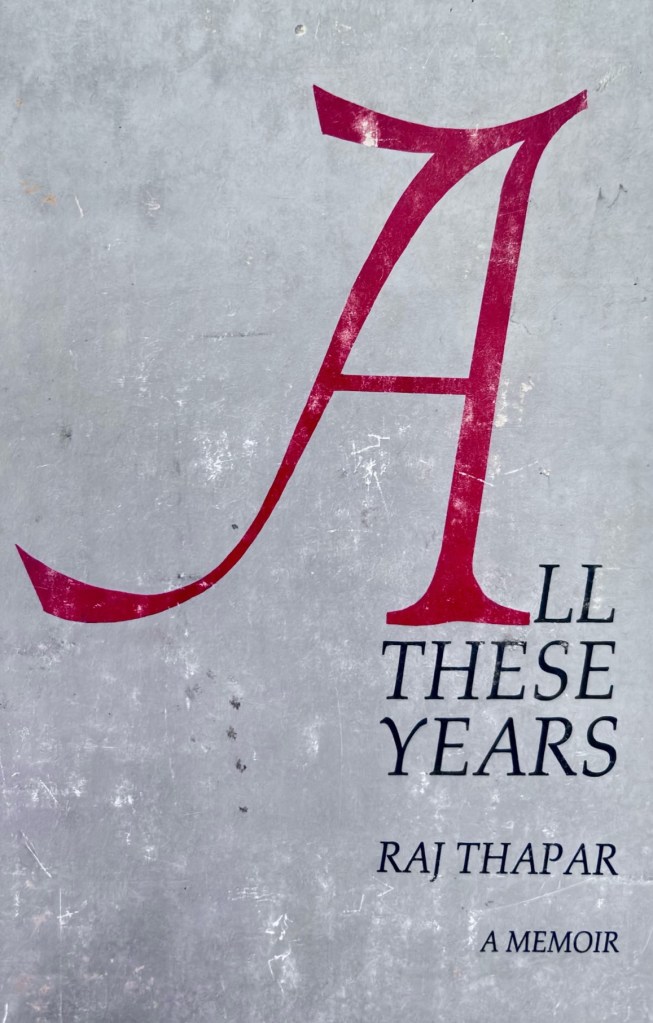
We sometimes find strange things about strange people in strange places, like I found Karimuddin Asif (a tailor who became a film director) in Raj Thapar’s memoir — All These Years — that was given to me by her daughter Mala Singh nearly 35 years ago.

“Your first lesson in politics,” Mala wrote on the first blank page of the book, which I got around reading again recently after three decades!

Amidst the politics spanning five decades I found Asif lying “in his bath tub atop blocks of ice, his method of cooling down for sleep” whenever he felt overwhelmed with the heat and tension of directing the glorious Mughal-e-Azam, starring Prithviraj Kapoor, Dilip Kumar and Madhubala, which took 16 years to make!

So what is Asif — who died young after making what was then biggest blockbuster of its times — doing in Raj’s memoir? He got in there because of her husband Romesh — at one point a close advisor of Indira Gandhi — who was tasked during his days in what was then Bombay to write the English script of the film for a then princely monthly fee of 700 rupees. Asif wanted an English version of the film. It didn’t happen.

Mughal-e-Azam almost ruined the financier Shapoorji Pallonji Mistry (more about him another time), but became a huge success once it hit the screens in 1960. It was the highest grossing film of all times in India and held that record until Raj Sippy’s Sholay took the crown 15 years later.

Asif, I learnt from the book, “answered in looks to all that the priggish associated with men of the cinema: uncouth, unlettered, unshaven, a slight twist in his jaw, dishevelled hair falling all over his forehead, short hands with stubby, stained fingers, a cigarette clutched between the middle and the forefinger, silk shirted and with chest on display, a gambler whose gambling instincts had brought him from tailoring … to the studios of Bombay.”

Asif married twice (one of his wives was the famous dancer Sitara Devi who finds mention in the book too), had six children and died leaving an unfinished film — Love and God — which had to be put on hold when its lead actor Guru Dutt passed on. Sanjeev Kumar was roped in, but then Asif called it a day at age 48.
Shut your eyes and imagine this film-maker lying on top of ice blocks in his bath tub on a balmy pre-monsoon Bombay afternoon and you can probably picture why it took as it long it did to make the film!

According to Raj, “it was a world of the bizarre, where in a sense they were all living in their fantasies, having pushed the other realities into some hidden corner of the mind.”

I wonder if much has changed in Bollywood since.

Prithviraj, Akbar and the metallic armour

Raj had an eye for details, finely carved while describing characters in her book. Read below an excerpt that brings to life the great actor Prithviraj Kapoor’s attempts to don the metallic armour and breathe Akbar into his soul:

“This obsession with exaggerated realism had its satirical moments. When Prithviraj Kapoor, who was playing the great Akbar, had to don the armour which was brought from the Jaipur Museum, Prithviraj sat on a stool for half-an-hour, eyelids shut, meditating, drawing inspiration for the character which he was about to portray. 

“Everyone stood around waiting in silence for Prithvi to announce that he was ready. He did so soon enough, in his deep, reverberating voice, always pregnant with some hidden meaning which no one was ever able to fathom — ‘Bring it now. I am ready.’

“Two hangers-on rushed out at great speed and brought the armour. Slowly they let it fall over his head and into position. Prithvi was still in nortial trance muttering to himself, then with his characteristic gesture of hand, convinced that the great Akbar was within him, he attempted to rise, but nothing happened. He tried once, he tried twice, but his massive frame refused to move, weighed down with the armour.

“How we had deteriorated in a brief five hundred years! Akbar must have donned that armour, leapt on to his horse, wielding at least a sword, and Prithvi, much the same in build and height, could not move from his stool. Everyone was stifling their laughs, it wouldn’t do to annoy Prithvi, but this was certainly more dramatic than anything else in the film, and seeing Prithvi’s defeated, dejected face, Asif took over. He ordered a light aluminium copy of the original armour, and the scene would have to wait until the replacement arrived.”

From All These Years – A Memoir by Raj Thapar. Seminar Publications, 1991
Trump win heralds higher tariffs for Asian businesses


From China to Japan, the Philippines to India, nations prepare for more volatility. Read more here.

Three Men And A Book


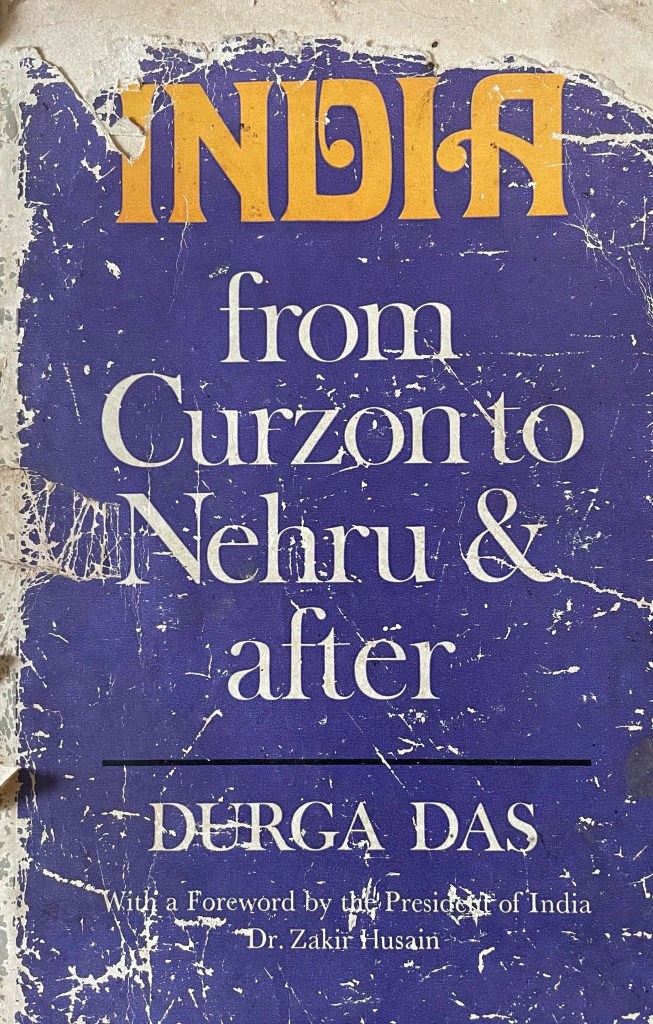
This, ladies and gentlemen, is a story about three men — all dead but bound together in the pages of a 53-year-old frayed and heavily pencilled book that I chanced upon last month while cleaning up my late father’s collection.

The paths of these men — a newspaper editor and chronicler of history, a patriot army general and my father — crossed at different times in the last century in a strange twist of fate that also found me looking at what I would call a historical treasure filled with facts, gossip and secrets that has made the book a fascinating read.

The journey of this prized copy of “India From Curzon to Nehru and After” also shows how strange coincidences fill our lives and how sometimes we, mere bystanders, become a part of stories that began long before us.

Durga Das, once a Reuters correspondent, editor of the Hindustan Times, founder of the Press Club of India and author of the book and General Nathu Singh, who could have possibly become the first Indian chief of the Indian army, were contemporaries who witnessed the violent birth of a nation that we now call home.

Born about seven months apart in 1900, the two chose different paths but played important roles in the story of India as it hobbled through an ugly partition and beyond. They both had a front-row view of events that shaped the formation of India and lived long enough post independence to be able to judge history.

Das, with a pen and pad in his hand and deep memory to store big and small stories, reported for what was then the Associated Press of India (which later aligned with the Indian News Agency before they were taken over by Reuters), as he hobnobbed with the Indian and British elite who mattered during the British Raj.

Singh, a dominant personality with a handlebar moustache who was the second Indian to graduate from the military academy at Sandhurst at 21, fought in the Second World War and ended up as ADC to India’s second last British governor general. It was to him that the Japanese troops surrendered in Nicobar in 1945 when the big war ended.

He later managed one of the biggest refugee camps in post-partition India for the hundreds of thousands who streamed in from the newly born Pakistan. Later, he commanded the army’s eastern region, which became the site for the first war between India and China.

My father was a mere bystander who walked into this story in the last years of the general’s life in a small town of Rajasthan.

The Book

How does the book connect them? Well, Das and Singh obviously knew each other and the copy of the book I am writing about was presented by Das to the general who probably lent it to my father when their paths crossed in early 1990s. The general hailed from Dungarpur and had retired there after his exciting military career. My father was then working there and befriended Singh because he simply loved meeting people and had a knack of bumping into many with interesting pasts. (He once found himself in a hospital in Nasik in mid-1950s where a man lying chained in the next bed and surrounded by policemen turned out to be Nathuram Godse’s brother, apparently recovering from a bad bout of dysentery!)

Das’s book, which many have panned as a continuum of historical gossip, was published in 1969. He presented a copy with the following inscription — “With best wishes to a great soldier patriot General Nathu Singh, Durgadas” — to the general a year later and then died in 1974.

Singh lived until 93, ramrod straight, sharp and with a voice that could still shake the cows and crops he tended at his farm just as it shook soldiers of the past. My father — 34 years younger than the other two in this narration — passed on this year.

When paths crossed

I never met Durga Das as I was only a decade old in this world when he called quits. My only connection with him beyond the book is the fact that we both worked at both Reuters and the Hindustan Times — many decades apart — in almost similar roles.

However, I did have the pleasure of spending time with the good general during my visits to Dungarpur to meet my parents. My father had told the general about his journalist son and I was ushered in to meet a man who didn’t quite look like the general I had expected to meet. Nearly four decades after leaving the army he was more of a farmer with fascinating stories from a past I then was only learning to understand.

I did end up writing his story for the newspaper I then worked for, re-introducing the man to the elite of the Indian capital he had left behind. The story struck a chord with many old timers in an age when there was no internet and social media. Unfortunately, I have lost the clipping of that story, though much of what he shared with me came alive in what’s scribbled on almost every page of the book.

The general obviously seems to have spent a lot of time reading and judging the contents of the book. I wonder whether he ever shared his views with Durga Das. Maybe he did. On the pages of the book the general had something to say about everything, much of which I am trying hard to decipher.

The reasons behind him not donning the hat of the army chief remain cloudy. The official version that is generally bandied about is that he was indeed asked, but declined and instead offered General K.M. Cariappa’s name as Cariappa was senior.

Another version that’s available on the Internet is that at some point in time the then Prime Minister Jawaharlal Nehru wondered if a Briton should be made the army chief for sometime as none of the senior Indian army officer was experienced enough in the new nation to make the grade.

Singh apparently questioned Nehru’s wisdom and wondered whether a Briton should also be made prime minister as no politician then has the experience of running the country. That made him unpopular with those who mattered.

The first chief

The general, however, mentioned to my father that he was against the division of the country and had put a gun to Nehru’s head demanding the decision to create the new nation of Pakistan be withdrawn. That obviously didn’t work in his favour when the new government went looking for a new army chief!

In Durga Das’s book there is no mention of Singh. He writes that the choice “lay mainly between General K. M. Cariappa and General Rajendrasinhji. (Then Home Minister Sardar) Patel favoured the latter, but Cariappa was chosen as the next C.-in-C. in view of the strong views expressed in his favour by (then defence minister) Baldev Singh and the Defence Secretariat. Rajendrasinhji, a kinsman of the Jam Saheb of Nawanagar, had his innings when he was chosen as successor to Cariappa.”

There are three question marks in pencil against that paragraph — no other comment — which I believe were put there by General Nathu Singh, the original owner of a book that landed in my hands through a quirk of fate.

I wonder whether General Nathu Singh wanted to say more, but didn’t!

The Morning After


The other day the car cleaner was late, the milkman didn’t show up and neither did the newspaper. The maid walked in late too, looking scared, fear in her eyes that told many stories.

Out on the road, which otherwise bustles in the morning, there was little activity. For a Monday, it was rather silent. Even the stray dogs weren’t scampering around for food. There was nobody to offer them any.

Life seemed to have reached a standstill.

The car cleaner said he hadn’t slept all night and had left home early to find safety in an environment that he presumed was not filled with rumours and hate as much as where he had escaped from.

People were running around with knives and iron bars in their hands, looking for the presumed enemy who was on its way to kill, maim, rape, burn, pillage, he said.

Rumours on social media had spread fast — sending everybody out to the streets or under lock and key in their homes, he added.

The car cleaner, who usually drinks at night, had found refuge behind a garbage dump where he had finished his daily bottle of local liquor and had hoped he would be able to sleep it out. The ghosts of the latest riots in the Indian capital, however, kept coming back and he couldn’t.

The maid, who walked in with fear in her eyes, spoke of empty streets and downed shutters. The cheap electric rickshaws that transport thousands of low-end workers every morning were off the roads. Shops that sell stuff people buy in the mornings – milk, bread, sweets — were all shut. Vegetable vendors, who set up their stalls before the morning crush begins, were missing.

“I walked. It was very scary. The streets were like a cremation ground,” she said, wondering whether her husband and child back home would be safe.

The milkman said he couldn’t pick up the supplies for delivery. He didn’t want to take a chance; best to do no business than get killed!

The newspaper vendor said nobody went to the collection centre to pick up the morning editions. The petrol station across the road had few customers.

The previous night, there was commotion at a musical event in a large park in one of New Delhi’s toniest areas when the rumours of violence in different parts of the city started spreading.

The first ones to make a run were a dozen women guards, who fled leaving behind a large audience still distracted by some good Indian classical music. Soon, they too began dispersing.

One colleague messaged, saying the gates of his colony had been shut and residents were keeping vigil through the night. So scared was he that he shared his wife’s telephone number — just in case something happened to him.

Mercifully, nothing happened that night. But some of the worst rioting in the Indian capital in more than three decades that killed more than 40 people, injured hundreds and destroyed homes and properties, has instilled a deep fear in people.

Nobody feels safe. Neither the poor, nor the rich. There is a good reason to fear the mobs; they kill without fear because they want you to be afraid.

That night the police chipped in, neighbours stood for each other and the night passed despite rumours.

But the fear will live on because of the violence that the city has seen. And the violence has been because of hate, which is now out in the open. The curtain has dropped — it doesn’t hide anything anymore. It’s too heavy with history to be put back up.

Travelling With A Star


If you follow Indian tennis, you would have definitely heard of Ankita Raina.

I don’t, so I hadn’t until I had her sitting next to me on a flight to Mumbai.

She walked into the aircraft with an air of quiet, matter-of-fact confidence – lugging a big, bulging sports bag that carried her gear and a small backpack.

She had a mobile phone, an extra charger and a book – all of which she laid out neatly on the seat as she prepared to settle in for the flight while looking around to get a fix on her surroundings.

At first glance, she could have been just another sporty young lady but then she wasn’t, as I realized when I woke up from my usual aircraft-taking-off nap routine. To my embarrassment I found that I was sitting next to a star – India’s top woman tennis player!

She was poised, but yet child-like, happy to engage in a conversation and laughingly share her stories from her travels to play in top tennis tournaments across the world – from the Wimbledon to Flushing Meadows and Roland Garros and Australia, China and even Morocco – mostly travelling alone as she can’t usually afford to carry her coach and family.

As I heard Ankita’s stories, I began to marvel this young lady who started playing tennis in Ahmedabad at the age of four (before moving to Pune for coaching) and has been hopping in out of international flights and checking into hotels in strange cities across the world all by herself since her teens.

With a twinkle in her eyes she told me how at a young age she pulled the chain to stop a train in Morocco, as she feared she had missed her stop as language barrier made it difficult for her figure out whether she had reached her destination.

Everybody on the train spoke French or Arabic, and not English. Helpless bawling helped when she was hauled to the station master and asked to pay a hefty fine, she said.

Or how once the airline staff wouldn’t let her go in Mumbai as she was a minor and her family had to drive up from Pune in the dead of the night to take her home!

And then how she had to show up at a tournament sleepless due to late flight changes for a match in China and still win it in straight sets. Impressive!

She also quietly and earnestly whispered that she had been bumped up into the business class thanks to an upgrade voucher one of her friends had given her.

Down to earth, realistic and supremely confident, the 26-year-old was also keen to get a picture with a well-known singer on the flight.

“Should I ask him,” she asked me.” I really want to get a picture with him.”

Will she put it on her social media handles, I asked. No, she replied, adding that she wanted the picture only because she loved his songs. She did put it on her Instagram page!

Ankita’s story of is one of determination, focus and dedication. It is also one of a young Indian who aspired to reach the top, worked hard and managed to get to there despite many odds.

She was in Mumbai to play in the premier tennis league before going back home to Pune – rest, eat home food (which she said she misses on her travels; the Gujrati thali is her favourite) and allow her mother – who works with an insurance firm – to embrace and pamper her.

She misses her family and coach during her travels, as others on the circuit travel with their parents and support staff, but she said travelling alone from a young age hasn’t made her lonely. It has made her stronger and more focused to achieve what she has set out to.

I wished her best of luck for the 2020 season as we parted ways and told her I would try and follow her journey to more success – breaking into the world top 100.

On my way out from the airport I kicked myself for missing out on a selfie moment. But then, there is always that next time!

You can follow her on @ankita_champ (Twitter) and #ankitaraina_official on Instagram.

Homo Gluttonous


Ten thousand desert rats, 10,000 fish, 14,000 sheep, 1,000 lambs, 1,000 fat oxen and many more creatures slaughtered, cooked and served: that is how Ashurnishabal of Mesopotamia (883-859 BCE) pampered almost 70,000 guests for 10 days. The Archbishop of York’s enthronement feast in 1466 CE required 104 oxen, 2,000 geese, 1,000 capons, 1,000 sheep, 400 swans, 12 porpoises and seals, and a great number of other birds and mammals. In an appropriately grandiose sidebar to his ornate reign as king of France, Louis XIV became incapacitated by overeating at one of his own weddings.

Read Here – Aeon

Was E-mail A Mistake?


As e-mail was taking over the modern office, researchers in the theory of distributed systems—the subfield in which, as a computer scientist, I specialize—were also studying the trade-offs between synchrony and asynchrony. As it happens, the conclusion they reached was exactly the opposite of the prevailing consensus. They became convinced that synchrony was superior and that spreading communication out over time hindered work rather than enabling it.

Read Here – The New Yorker

The Pirate-y Life Of Ferdinand Magellan


From the start, it was hard to know whose side Ferdinand Magellan was on. Born in northern Portugal around 1480, Magellan, an orphaned son of lesser nobles, spent decades serving the Portuguese crown in its wars abroad, in India and Malaysia. One might think Magellan was the epitome of national devotion. But in 1518, after being rejected by the Portuguese authorities, Magellan turned to his country’s greatest rival: Spain.

Read Here – JStor Daily