Obscene language presents problems, the linguist Michael Adams writes in his new book, In Praise of Profanity, “but no one seems to spend much time thinking about the good it does.” Actually, a lot of people in the last few decades have been considering its benefits, together with its history, its neuroanatomy, and above all its fantastically large and colourful word list.
Author Archives: lookingbeyondborders
Donald Trump And His Known Knowns
People all around seem rather agitated with the start of a new regime in the United States. And yes, I am using the word regime, which the Western media usually uses for rogue and unpredictable governments for only one reason: the new administration in Washington is unpredictable and can indeed go rogue, or so some Americans would want you to believe.
Donald Trump, the new president, has ignited passions in a manner unseen in recent memory – upsetting not only hordes of Americans, but also intelligent folks around the world who seem to widely believe that he might be the ultimate disaster to hit all of us.
However, it is not the end of the world, Not yet.
Let’s be fair to Trump and the process of democracy that brought him to power. Those who are complaining are Americans who either did not vote for him or many like us who are citizens of other countries and, therefore, ineligible to vote in U.S. elections. Both these constituencies have no reason to crib, so let’s hear what Trump is saying. There is a fair chance that if he is making sense to some, he might start making sense to all.
Lets also understand that Trump, who has never held a government office or been in military, will click very differently than many of his predecessors who were active in politics or military before they assumed the high office.
Since Trump is essentially a businessman, an unabashed profiteer and a salesman (who has done well to create his own brand across many countries), for him world affairs, global diplomacy and international trade will always be about negotiations and deals – both of which he is good at.
Should we complain about a man – whatever his past may be (and Trump’s not exactly without in-your-face blemishes) – just because he is different from his predecessors and doesn’t conform to our “global” definition of a politician or a president?
Eventually what matters to Trump and those who voted for him is whether he delivers what he promised to. There is no problem with his “America First” for Americans. If the rest of the world has a problem with it, it is not Trump’s problem and the 45th U.S. president seems to know it well – at least for the time being.
China, Europe and even Indian IT companies can fret because Trump’s policies can hit their businesses in the United States; for Trump what matters is looking after his country’s interests – whether they be jobs, infrastructure or Islamic radicals. As president of his country he is first answerable to and responsible for the people of his country. In short, national interest will drive him just as it did his predecessors.
We may not appreciate his front-foot statements and awful tweets, his name-calling and his orange hair or even lack of political and diplomatic etiquettes. What, however, we do need to remember is the world will have to deal with President Trump at least for the next four years.
Governments and businesses will have to, therefore, quickly learn to deal with his idiosyncrasies, his unpredictability, his awful spokespeople, his son-in-law who Trump says will resolve the issues in the Middle East and his purported closeness to Russia and its president Vladimir Putin. Americans will also have to deal with a man who doesn’t’ fit the role; the very reason he got elected and one who will do everything to undo whatever his predecessor Barack Obama did.
In the weeks and months ahead all of us have to get used to a new narrative from Washington. We have to get used to dealing with a penny-pinching, hard-bargaining businessman who will keep his interests (or should we say America’s interests) high on his list of things to do.
And that brings me to what former U.S. Defense Secretary Donald Rumsfeld’s once-considered-gobbledygook theory of the known knowns, the known unknowns and the unknown unknowns. I’d put Trump in the first category. We do know him, and we also know what he will do — not very different than what he has been saying he would. What we still don’t probably have the foggiest idea about is that whether he is going to be around for four years or eight.
Good luck, everybody!
RS
Small Town Vignettes

The paperwallah

In the name of god

Waiting to cook


Shower time

Afternoon siesta

Blowing the breeze
Will China Find The Next Tutankhamen In Egypt?
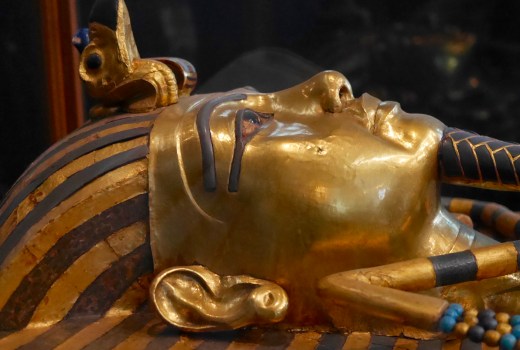
It has been nearly a century since the British archaeologist Howard Carter discovered the burial place of King Tut in the famed Valley of the Kings in Egypt.
That was the first, and as yet the last, fully intact tomb of an Egyptian Pharaoh to have been found. While archaeologists have kept digging since, they have not discovered any that hasn’t already been ravaged by gravediggers in the ancient times.
Now, it is the turn of the Chinese to try their luck.
Chinese archaeologists are expected to start digging in Egypt for the first time, as authorities of the two nations are in discussion of a cultural cooperation project, Xinhua reported.
Institute of Archaeology under the Chinese Academy of Social Sciences will collaborate with Egyptian experts to carry out archaeological excavations, cultural relics protection, and safety monitoring and control in key sites in Egypt, Wang Wei, director of the institute told.
The institute will also train Egyptian experts in protecting archaeological discoveries.
“This will be the very first time that two of the four ancient civilizations join hands in archaeology — it could be a milestone in the history of bilateral cultural exchanges,” said Wang.
“Working in Egypt, one of the oldest civilizations in the world, is a dream and an honor for most archaeologists,” he said. “We will likely start with the Egyptian temples.”
Egypt has conducted more than 200 excavation and cultural-relics protection projects with foreign institutions, but none of them with China.
Chinese archaeological teams own the world’s leading three-dimensional remote sensing and three-dimensional imaging technology, as well as advanced indoor testing and analysis techniques, said Wang.
China also has rich excavation and research experience with large-scale historical sites, like big cities and palaces, which could help Egypt.
India May Not Like It, But Sri Lanka Can’t Move Completely Away From China
Buried under billions of dollars of Chinese debt, Colombo has little option but to go along, albeit at a pace slower than earlier. After all, Chinese money did prop up the war-battered economy and created jobs. and this did help the government in ending the war against the Liberation Tigers of Tamil Eelam. The Chinese know that while the wicket might be sticky at this point, the pitch will eventually help the ball turn their way.
Dragon Flu – Is It Just A Sneeze Or…?
China has been the elephant in the room since Lehman Brothers folded up, triggering the last wave of global economic turmoil. It stood out as the biggest contributor to global growth in the past eight years. But now the bubble, long expected to burst due to a mammoth build up of debt, is popping the wrong way.
Majed And His Mosque
Rahul Sharma
I could have met Majed any time, any place. Only, I was destined to meet him at Bahrain’s Grand Mosque one hot, balmy afternoon.
It wasn’t that I knew of Majed and went looking for him; he just happened and there we were, two perfect strangers, sitting on the plush carpet under the al Fateh mosque’s huge chandelier talking about our lives and religion. One a god-fearing Muslim; another a Hindu by birth who sometimes visits temples to appreciate their architectural values.
But it is easy to talk to strangers. There is no baggage, nothing to prove. You can be friends later, but for that moment there are few barriers and the conversation meaningful.
So when Majed, with a smile on his face, extended his hand and offered to show me around the big mosque, I was more than glad to have someone I could talk to.
Majed, he said, introducing himself, as we walked towards the marble-tiled courtyard and he began telling me the history of the place. Through the big courtyard, which was much smaller than the one at the grand mosque in Abu Dhabi, he took me inside to the large, carpeted prayer hall where hung one of the most beautiful chandelier I had seen.
The Al-Fateh mosque in the Bahraini capital Manama took four years to build and was opened in 1988. Spread over 6,500 square meters, it can accommodate 7,000 worshippers. It is part of an Islamic centre, which also includes a large Islamic library and a department of Quranic studies.
The floor and some walls of mosque are covered with Italian marbles, the huge dome from which hangs the Austrian-made chandelier is made of fibreglass and the massive doors are made of teak brought in from India. Hand-blown glass lamps surround the chandelier, adding to its regal disposition.
“The wood was brought from India and the doors were made here,” Majed informed me, as he sized my interests and showed me key points from where I could take photographs.
Once inside, where in a corner some students softly learnt to recite the holy Quran, Majed and I sat down and began chatting. But before that, he took my camera, lay down right under the big chandelier and took a picture. “You see it best lying down,” he said. Indeed, I did.
Majed had questions. Who was I, where had come from, what was my interest in the mosque, was I religious, did I believe in God, did I understand Islam, what all had I seen in Bahrain, whether it was my the first time in his country?
I had my questions: was being a guide at the mosque his day job? What did he do in his free time? Was he a Shiite or a Sunni (Bahrain is majority Shiite, but the ruling family is Sunni)? Where had he studied? What was his world view? Did he consider the West his enemy? Was he political? Did he believe the recent nuclear deal between Iran and several other countries led by the United States would change the politics of the region?
Majed was happy to answer. He helped visitors at the mosque because his English was good and he could, therefore, as in my case, understand the questions and answer them. He was at the mosque a couple of days a week, but his real job was with the coast guard which he had joined after a stint in the navy.
His near flawless English suggested he had studied abroad. Yes, he had gone to the United States to study, he told me, adding that it was all paid for by his government.
“I remember being stunned by the green plants and trees there. Here we only have yellow sand,” he said, pointing outside one of the large glass window battered by the hot afternoon sun.
Majed said he understood the world and its people better once he stepped out of Bahrain. They didn’t hate us, he said. I wanted to ask him what he meant by that, but then we were distracted by some other visitors and the conversation moved towards what I knew of Islam. “Are you a Shiite or a Sunni,” I asked. His answer: I am a Muslim; sects are created by people who are interested in power.
Reflections In The Mirror
When I asked him to elaborate, he explained the root of the word Islam which is both a verb and a noun. A verb because it come from aslama that means to surrender, submit or obey. A noun because it is the name used in the holy Quran for followers of Islam, but since the Arabic prefix “mu” is added to denote the one performing the action it become “Mu”- “Islam” or Muslim.
My education didn’t stop there, and it wasn’t religious propaganda that he wanted to share with me. Majed was only trying to clear what he thought were my misperceptions and misrepresentations of a religion he felt I didn’t really understand.
His was an honest attempt to show me the mirror that clearly reflected my lack of knowledge of the world’s fastest growing religion at a time when it is under attack in various ways from various quarters.
Later, after I had answered his questions, we stepped up into the large balcony of the prayer hall from where the view of the chandelier was even better. The glass bulbs added to the mystery of a dome that looked dark and deep.
“This is where the women gather for prayers,” Majed told me, as we walked around the carpeted area towards a huge window through which some of Manama was visible. He shared more photograpic tips with me, as I clicked more pictures.
His final question as he walked down the stairs to show me out was whether I believed in God. I told him I didn’t, but I believed in the existence of some supernatural power at play at times. He looked at me for a while, nodded and said: “There isn’t much difference between the two, is it?”
I stepped out in the heat, looked at the imposing minaret of the sandstone mosque, and wondered whether there was indeed any difference in our Gods. Then I realised I didn’t know Majed’s full name. I hadn’t asked him; he hadn’t told me. Two strangers had parted way, dissolving in the sands of time, as quickly as they had met.
In Bahrain
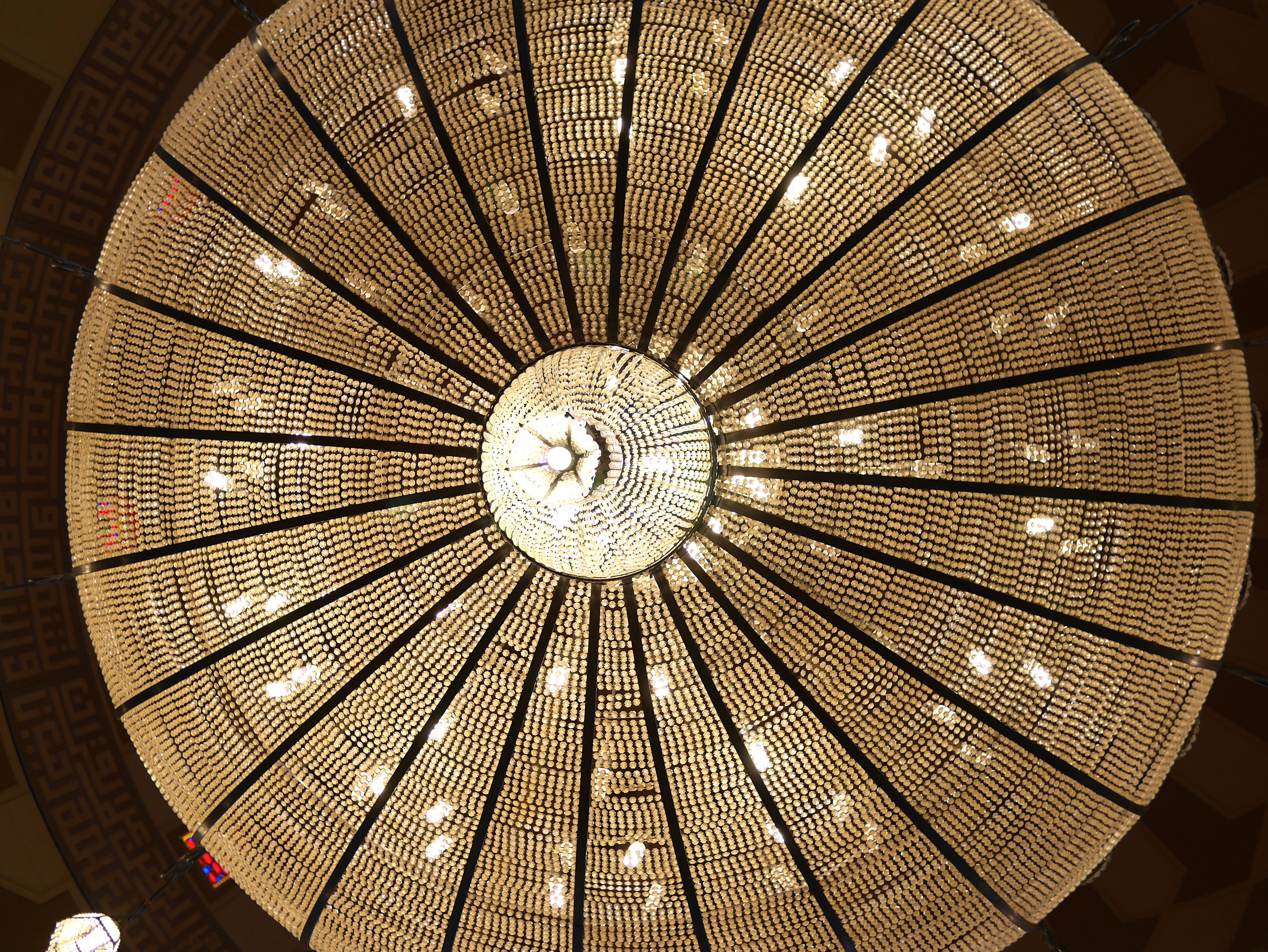
The chandelier at Bahrain’s Grand Mosque
Travel Times
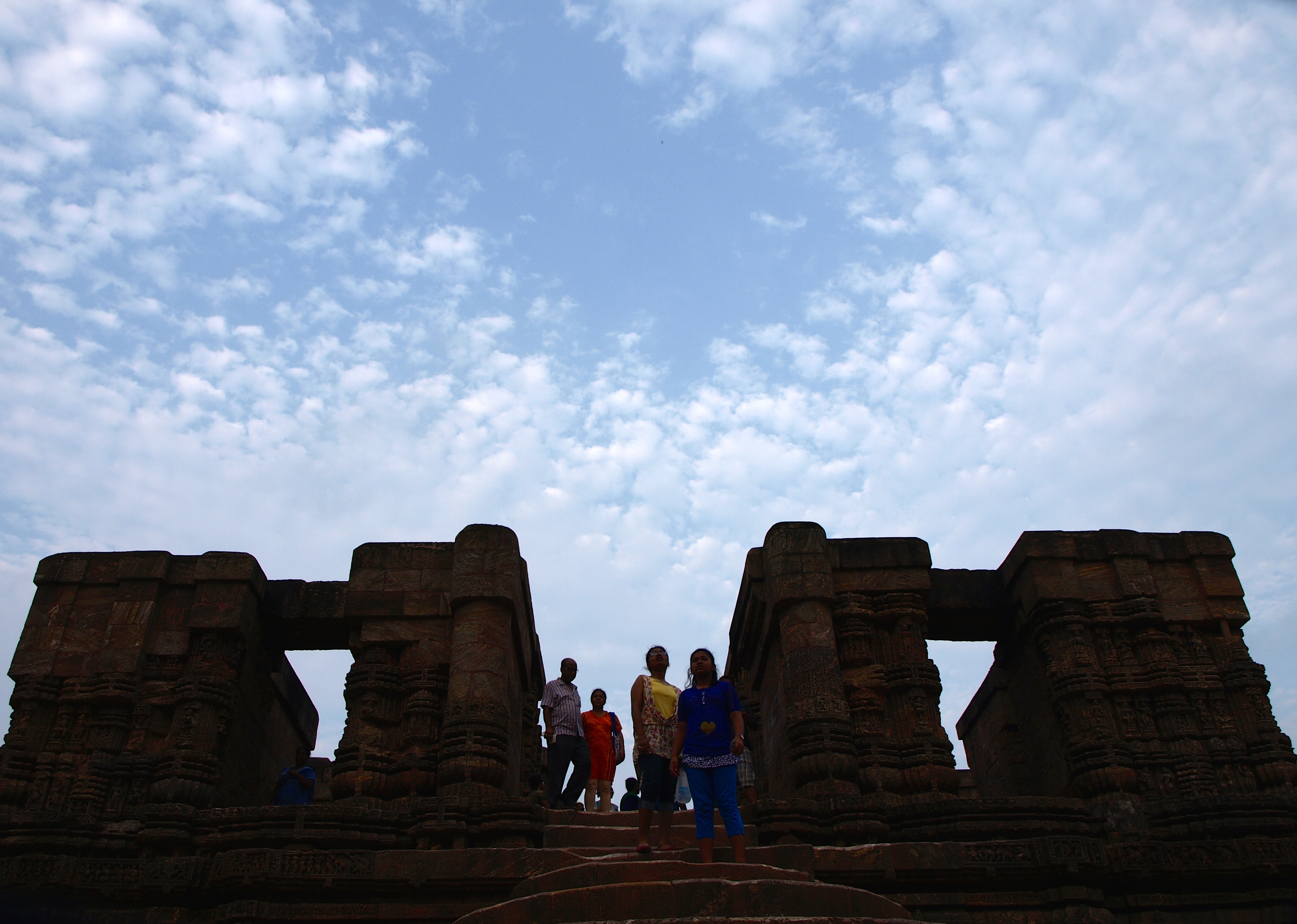
Konark, Odisha
-
- Bundi, Rajasthan
-
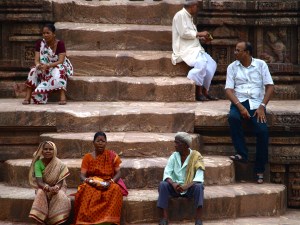
- Konark, Odisha
-
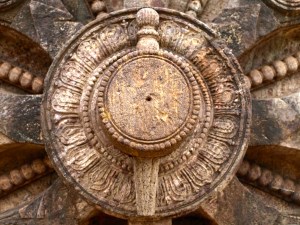
- Konark, Odisha
-
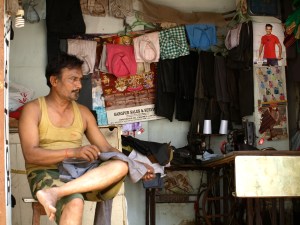
- Puri, Odisha
-
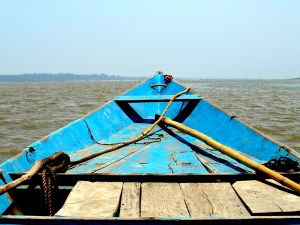
- Chilka, Odisha

