Rushing to publish and overlooking glaring typos may have become part of the new economics of traditional publishing. But on the Web, typos sometimes come with a price. “Spelling mistakes ‘cost millions’ in lost online sales,” said a BBC headline last week. The article cited an analysis of British Web figures that suggested that a single spelling mistake on an e-commerce site can hurt credibility so much that online revenues fall by half.
Author Archives: lookingbeyondborders
Why You Need Emoji
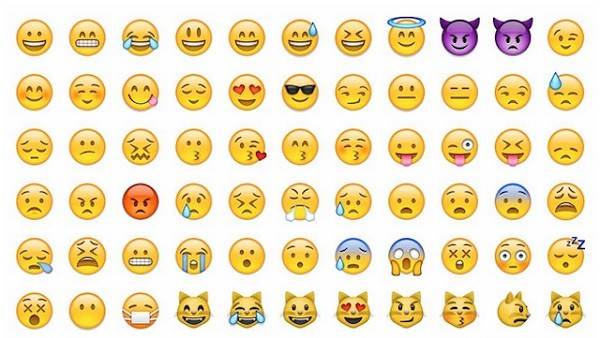
As a significant proportion of the meaning of a communicative message in social interaction derives from nonverbal cues, it stands to reason that text alone—the linguistic mode—conveys only a relatively small proportion of the information we have access to, in spoken exchanges. There’s a gaping lacuna in what digital talk, alone, can convey.
Before You Can Be With Others, First Learn To Be Alone
In 1840, Edgar Allan Poe described the ‘mad energy’ of an ageing man who roved the streets of London from dusk till dawn. His excruciating despair could be temporarily relieved only by immersing himself in a tumultuous throng of city-dwellers. ‘He refuses to be alone,’ Poe wrote. He ‘is the type and the genius of deep crime … He is the man of the crowd.’
Why Are China’s Venture Capitalists Going Gaga Over A Tibetan Pilgrimage Film?
A birth, a death, a pilgrimage. A film about the 1,200-mile journey of a pregnant woman, a butcher who wants to atone for his sins and a rag-tag band of villagers who go on foot from their small village in Tibet to the sacred Mt. Kailash has become a surprise winner at the Chinese box office. It has also found a cult following among an unexpected audience — China’s venture capitalists and startup founders.
There Is A Difference Between Hearing And Listening
The sense that we are not being listened to is one of the most frustrating feelings imaginable. Toddlers scream about it, teenagers move out, couples split up, companies breakdown. One of the main reasons this breakdown in communication occurs is that listening (like reading, thinking clearly and focusing) is a skill which we rarely consider to be something requiring knowledge and practice.
The Iphone’s Turning 10. What Will It Look Like At 20?

This week marks the 10th anniversary of the iPhone, which hit store shelves on June 29, 2007. (It might be more accurate to say they grazed store shelves before landing in the hands of buyers who spent days camped outside Apple Stores.) Now, any number of statistics speak to the seismic shift the iPhone caused. Four billion people own a smartphone. The devices generate hundreds of billions in revenue each year. They gave rise to entire industries like smart homes and drones. Hell—you’re probably reading this on your phone.
The Tree Of Knowledge Is Not An Apple Or An Oak But A Banyan

The tree of knowledge has a plurality of roots, and structures of knowledge are multiply grounded in the earth: the body of knowledge is a single organic whole, no part of which is more or less dispensable than any other. ‘Stands an undying banyan tree,’ says Krishna in the Bhagavad-Gītā, ‘with roots above and boughs beneath. Its leaves are the Vedic hymns: one who knows this tree knows the Vedas.
How Totalism Works
Not all leaders want to get rich, gain sexual favours, or grab political power. But all want utter control over others. Money, sex, free labour or loyal combatants are all fringe benefits, and certainly most leaders take advantage of these, some in a big way. But absolute control over their relationships is the key.
Power Causes Brain Damage
If power were a prescription drug, it would come with a long list of known side effects. It can intoxicate. It can corrupt. It can even make Henry Kissinger believe that he’s sexually magnetic. But can it cause brain damage?
Humans Of The Near Future
A new breed of human is on its way. Transhumanists are a group who seek to accelerate the evolution of humanity through science and technology. Oliver Pickup investigates the movement, the implications for humankind and asks, is it morally wrong to augment humans?

