The Tsimane People of the Amazon (pronounced chee-MAH-nay, roughly) hunt, farm, and forage. They don’t have a lot of technology. And if you talk to them about the colours they see in the world, they say some pretty interesting things…In the world of colour research, that’s unusual to the point of uniqueness. Across languages and cultures, people tend to break up “colorspace,” the universe of all the colours humans see, in roughly the same way—different words, sure, but for mostly the same colors
Category Archives: Life
The Surprising History (And Future) Of Paperweights
Glasshouses like Baccarat, Saint-Louis, Clichy, and Pantin revived ancient techniques such as flame working, filigree, and millefiori, “thousand flowers” wrought from brightly colored glass canes; they also perfected plant and animal motifs. These paperweights were useful, fashionable, relatively inexpensive, and cheery (a way to keep flowers on desks even in winter), and their manufacture spread through parts of Europe. Immigrant glassworkers brought the trend and their know-how to America. But by 1860, the bauble-bubble was cooling off.
See How Human Activity Is Changing Animal Migration Patterns
Zozu, like any other white stork in Europe, typically flies to southern Africa for the winter. Yet when researchers at Germany’s Max Plank Institute for Ornithology tracked the bird’s path using a GPS logger in 2016, they found that he and a few others had skipped the gruelling migration across the Sahara Desert. That year, the birds stopped, instead, in cities like Madrid, Spain, and Rabat, Morocco. Apparently, they had developed a taste for junk food, in particular the stuff that piles up in landfills along the migration route.
Before You Can Be With Others, First Learn To Be Alone
In 1840, Edgar Allan Poe described the ‘mad energy’ of an ageing man who roved the streets of London from dusk till dawn. His excruciating despair could be temporarily relieved only by immersing himself in a tumultuous throng of city-dwellers. ‘He refuses to be alone,’ Poe wrote. He ‘is the type and the genius of deep crime … He is the man of the crowd.’
There Is A Difference Between Hearing And Listening
The sense that we are not being listened to is one of the most frustrating feelings imaginable. Toddlers scream about it, teenagers move out, couples split up, companies breakdown. One of the main reasons this breakdown in communication occurs is that listening (like reading, thinking clearly and focusing) is a skill which we rarely consider to be something requiring knowledge and practice.
The Tree Of Knowledge Is Not An Apple Or An Oak But A Banyan
The tree of knowledge has a plurality of roots, and structures of knowledge are multiply grounded in the earth: the body of knowledge is a single organic whole, no part of which is more or less dispensable than any other. ‘Stands an undying banyan tree,’ says Krishna in the Bhagavad-Gītā, ‘with roots above and boughs beneath. Its leaves are the Vedic hymns: one who knows this tree knows the Vedas.
How To Learn How To Think
Let’s start with how you don’t learn to think. A study by a team of researchers at Stanford came out a couple of months ago. The investigators wanted to figure out how today’s college students were able to multitask so much more effectively than adults. How do they manage to do it, the researchers asked? The answer, they discovered—and this is by no means what they expected—is that they don’t.
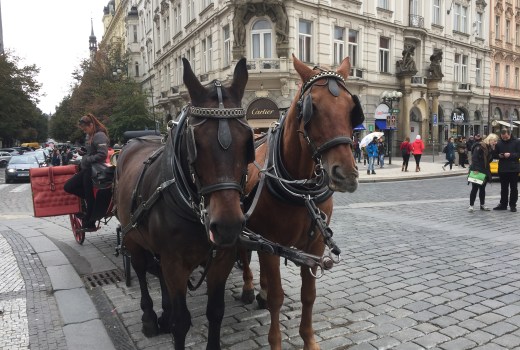
How The Horse Made History
Six thousand years ago wild horses roamed the plains and steppes of the world. They were like many prey: fleet of foot, alert to threats and largely unaggressive. Then, in the Copper Age, the Botai people east of the Urals found a way to hunt them—for their meat and skins—and, later, to domesticate them. In horses, the Botai and succeeding civilisations found the best of partners. Horses are seen to be quick-witted and forgiving.
The Puzzling Way Writing Heals The Body
What does the act of committing words to paper do? Initially it was assumed this simply happened through catharsis, that people felt better because they’d let out their pent-up feelings. But then Pennebaker began looking in detail at the language people used in their writing.
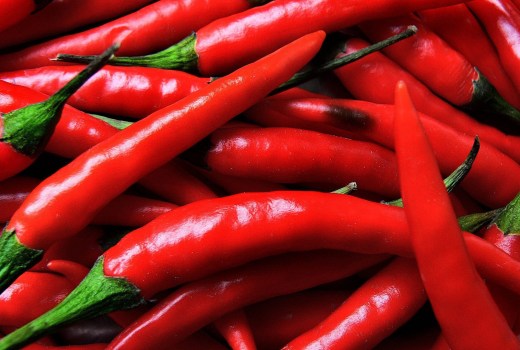
The Science Of Hot Chilli Peppers
The standard heat rating scale for peppers is called the Scoville Scale after its inventor, Wilbur Scoville, an early twentieth century pharmacist and pepper aficionado. The scale ranges from 0- 15 million Scoville units. A Scoville Score represents the ratio of pepper to water that is detectable to a taster.